

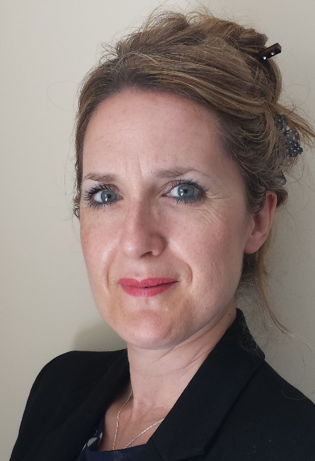
Dr Paula Hopkins C.Psychol.
Principal EP and IN-TACT Lead
What is In-TACT?

At Discovery Trust, we believe every pupil deserves the opportunity to thrive, academically, socially, and emotionally. To support this mission, we offer access to In-Tact.
In-TACT is our multidisciplinary service which stands for I
nclusion, Therapies, Assessment, Consultation & Training and has been designed to provide holistic support across Discovery schools and Partnership schools who have entered into an agreement with Discovery with view to onboarding
at a future date with our Trust.
Led by the Principal Educational Psychologist, Dr. Paula Hopkins, In-TACT brings together expertise in psychology and counselling and will develop quickly to include speech and language therapy (SALT), Occupational Therapy, Play
Therapy and Music Therapy.
In-TACT Services -Vision
In-TACT Services exists to help educational settings and families see children as their authentic selves and provide training, consultation, assessment and therapy to enable all children and young people to feel safe, understood and supported so that they can thrive. We want all children and young people to find their bespoke talent and for all adults to adopt hope and a solution-focused approach to meet all differences and needs using a coherent approach. For children and young people to be seen as unique human beings and for everyone to think about children psychologically.
In-TACT Services- Mission
In-TACT Services will serve all Discovery educational settings and families via a multi-agency approach, currently comprising educational psychology (a universal provision), speech & language therapy, and occupational therapy. In-TACT are seeking a trust-wide overview of all SEND and therapeutic needs, to provide baseline training for all Discovery staff and to be involved at a strategic level. Every discipline in In-TACT will have their own unique identity and mission whilst we all work creatively, passionately and from an evidence base.
EPIC Psychology
EPIC Psychology have a clear understanding of key psychological theories to support Discovery settings, children and families. We have a core training offer that spans the entire Trust and aim for every setting to adopt ELSA (Emotional Literacy Support Assistant), Togetherness Solihull Approach Model and MeLSA (Mediated Learning Support Approach at its core.
We are integral to the central team and have representation at all Heads and SENDCO Networks. EPIC Psychology’s next aim is to work collaboratively with subject leads on Trust strategies such as the maths strategy, working towards NAS autism accreditation and developing trauma-informed practice. We strive to use current evidence-based approaches for the best outcomes, e.g. DNA-V for EBSA, Supportive Parenting for Anxious Childhood Emotions (SPACE) for supporting parents whose children are significantly anxious and offer screener projects to the Trust for early identification. Our Universal offer reaches all staff and parents across the Trust, through online webinars, face-to-face training and various Professional Learning Communities (PLC). EPIC Psychology aims to reach the point where we have a sustainable model across the Trust and a strong framework for working with schools and trust-led needs on the most challenging aspects of SEND, as well as universally removing barriers to learning and promoting mental health.
Speech and Language Therapy
The SaLT service will develop in alignment with Trust needs and the ever-evolving evidence base in the upcoming academic year. SaLT will provide universal-level training to promote communication-friendly environments as well as targeted support for colleagues providing SLCN-specific interventions directly within schools, in addition to specialist assessment and consultations. The In-TACT Speech and Language Therapy service is committed to working in a neurodiversity affirming and strengths-based manner across the trust. SaLT will become interwoven with the work of educators throughout the trust, consistently promoting collaboration with the aim of sharing and replicating good practice.
In time, the SaLT service also intends to establish a clear pathway for children and young people with Developmental Language Disorder (DLD). This will give these students access to specialist assessment and a therapy plan to be delivered as part of the targeted provision (under the guidance of a Speech and Language Therapist). Additionally, early language intervention will be prioritised. Initially, this will be achieved through training of educators as aforementioned; however, the Building Early Sentences Therapy programme (delivered jointly between education and a Speech and Language Therapist) will be piloted in a priority setting with a view to this being rolled out to more settings in due course.
EPIC Psychology’s Universal Offer for
Discovery School’s
EPIC Psychology’s Universal time, together with time dedicated centrally to the Trust, will be apportioned across a range of strategic priorities. The largest proportion (54%) will be allocated to training and supervision activities, including ELSA, MeLSA, Togetherness Solihull Approach Model training, conference attendance and delivery, PLCs, webinars, and the parent/carer offer. A further 17% of time will be dedicated to the Sociogram Project, with 15% allocated to the development and implementation of screeners and pathways, including work relating to maths approaches, transition, and Emotionally Based School Avoidance (EBSA). Educational Equity Index Screener development will account for 8% of the allocation, while 5% will be dedicated to networks and evolution days, including support for Headteachers, SENDCos, the ELSA PLC, and the Education Strategy. The remaining 1% will be reserved for critical incident support.
Of the EP time allocated directly to Discovery schools, provision within mainstream schools will be apportioned across a range of activities designed to support children, families, and school staff. The largest proportion of time (60%) will be dedicated to casework, consultation, and parent support, comprising 50% child-focused work and 10% parent/carer support. A further 20% will be allocated to drop-in surgeries and supervision activities, including support for Individual Support Plans (ISPs) and target setting, anonymous consultations, team supervision sessions, solution circles, circles of adults, and PATH planning. School-based training and collaborative working groups will account for 10% of EP time, encompassing staff meetings, team training sessions, and training for teaching assistants and other school staff. The remaining 10% will be dedicated to direct therapeutic work with children and young people. For special schools, these proportions may be adjusted as necessary to reflect the specific needs and priorities of each setting.